

Cindy and I love Jesus’ church, and we have poured our lives into it. Lest the title of this article cause concern, we want to be clear: church and other Christian ministries grouped by age are important. Everyone needs friends their own age, particularly Christian friends. However, we have witnessed the silent pitfalls of generational isolation. Those experiences illustrate why CrossGen Life’s focus extends beyond the family and into the church community.
As described by its pastor, consider this church scenario: “No one planned for our congregation to become generationally siloed. Our age groups weren’t hostile toward one another, but neither were they connected. Few people beside me were concerned — after all, attendance and finances were inching upward, and everything seemed healthy…”
“But then came a perfect storm: unresolved staff conflicts, seasoned elders relocated or stepped down, key families moved away, members developed debilitating illnesses, generous older saints died, and life-changes caused significant volunteers to quit. Slow growth shifted to a slow bleed in attendance and finances. Into that fragile moment, someone tossed the first pitch of the blame game. What followed was inning after inning of doubt and discouragement.”
“Looking back, I’ve concluded that better communication and mutually-beneficial relationships between the generations — and between their leaders — could have given our congregation the resilience to weather those challenges.”
No two church stories are the same, but there are similarities in modern building design and use. Walk into even a small church building on a Sunday morning and you’ll see age-sorted spaces. Kids head to brightly colored areas, teens disappear into a back room with a high-energy vibe, and young adults may actually have a 'modern' service in an entirely different location. Meanwhile, the main sanctuary is filled with middle-aged to older adults. While this feels normal today, this kind of intentional generational separation is a relatively recent shift in the history of the church.
Everyone is cared for. Every program is staffed. The result is a collection of parallel, often remarkable and memorable experiences rather than a community. This is the Generational Silo. It’s not built with bad intentions—it’s usually the result of trying to serve people well—but unintentionally, these separate tracks are making our churches fragile.
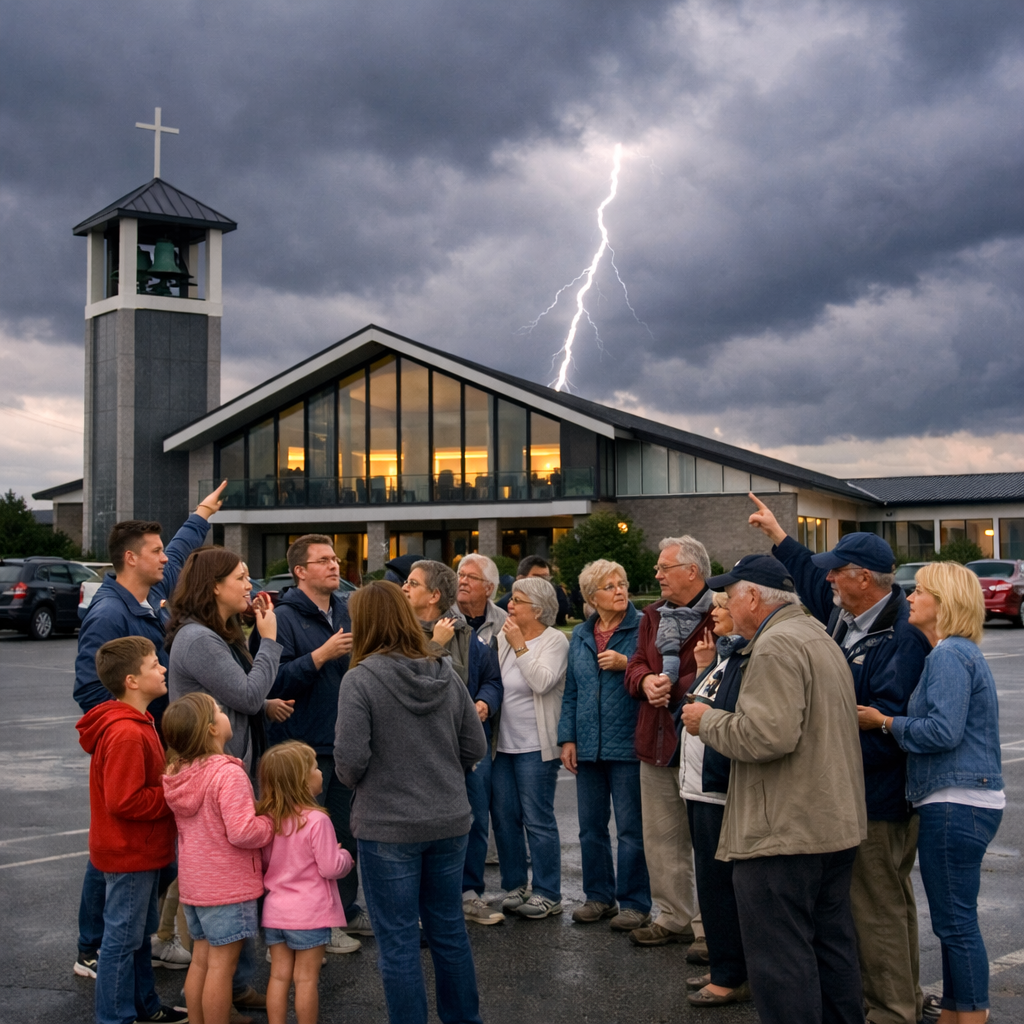
Church storms, internal and external, happen. Storms don’t create weakness — they reveal them. When storms strike, the bonds of generational connection offer an often overlooked source of resilience.
Siloed generations don’t look like a crisis until a real crisis hits.
And the crisis doesn’t have to be about generational disconnection — the crisis simply exposes it.
When storms come — the kinds churches are facing right now — isolated generations don’t have the communication, trust, or relational bridges needed to draw on each other’s strengths. The church ends up fragmented, under‑resourced, and unable to mobilize the wisdom, energy, resilience, resources, and spiritual depth that only intergenerational connections can produce.
Intergenerational connection isn’t a luxury. It’s the Biblical infrastructure that keeps churches strong when pressures come.
The Problem with Comfortable
Silos are efficient and easy to market. Its easy to separate one style of music and one way of preaching for people who are similar in age and preferences. But efficiency isn't the same as health.
When a church splits into generational silos, it loses the “relational glue” that holds a community together during tough times. Studies show that young people frequently walk away from the Christian faith simply because they lack meaningful bonds with older generations. At the same time, older saints often feel sidelined or “phased out.” This separation isn't just an administrative oversight—it quietly fractures our unity and leaves the whole church vulnerable.
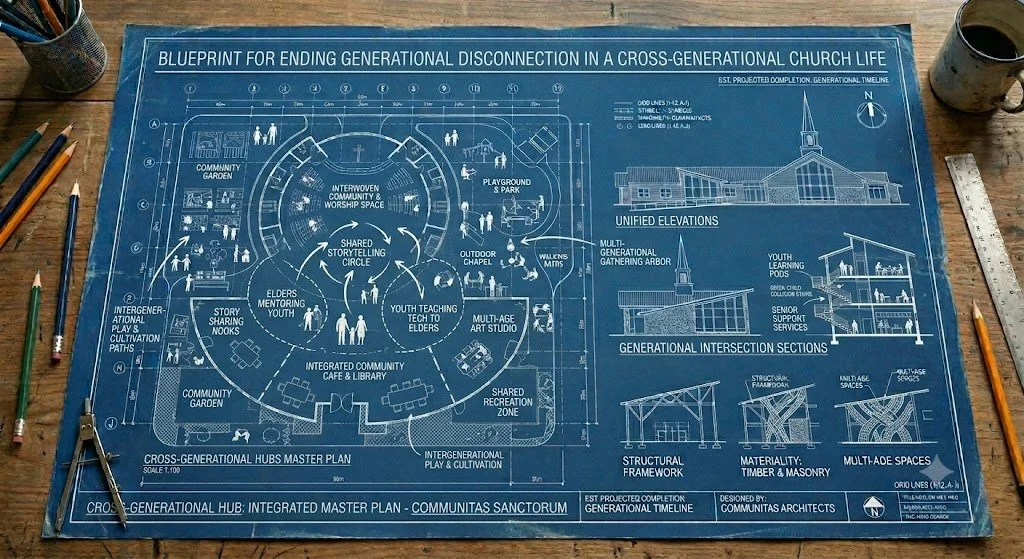
What we design is what we build. Blueprinting for intergenerational connection requires new ways of looking at a congregation’s use of its spaces—both on Sundays and during the week.
The Biblical blueprint: A Multi-Gen Church
The idea of a "CrossGen" community isn't presented to be trendy; it’s the original design.
In the Old Testament, faith wasn't passed down through a professional class of educators; it happened around the dinner table and on the road (Deuteronomy 6). Psalm 78 reminds us of our duty. This to make sure the successive generations know the stories of God’s faithfulness. You can’t tell those stories if you never talk to the people who need to hear them.
In the New Testament, the church is described as a body. Think about that. A body where the hand doesn't talk to the foot is in big trouble. Peter’s quote of the prophet Joel on the Day of Pentecost described the Holy Spirit’s anointing on every generation. Paul’s letters envision older men and women mentoring the younger as a natural part of church life. These were not scheduled programs, but as a way of being.
The early church met in homes where everyone from infants to grandparents sat in the same circle. They didn't have "Senior Saint Luncheons” and "Youth Lock-ins" happening in age-sealed bubbles. They had each other.
Again, we are not saying age-specific activities are wrong. Of course not. It is not one or the other, “Its both-and.”
When generations are disconnected, the average congregation—which research shows hovers around one hundred people—simply cannot tap into the vision, cooperation, and resources needed to face the challenges of a post-Christian society. While corporate-modeled megachurches might have the sheer scale to weather these storms, average-sized churches require intergenerational respect, appreciation, and communication to survive and thrive.
Six Frameworks to Trellis a CrossGen Shift
Intentionality is Everything: Silos don't cease by accident. The "path of least resistance" typically leads back to age-segregation. You have to name cross-generational connections as a worthwhile goal and pursue them on purpose.
Mission Over Demographics: We aren't together because we like the same snacks or music; we’re together because we have the same Savior. When the mission is bigger than our preferences, our differences become strengths.
Need Each Other: Don't just put everyone in the same room; give them a job to do that requires different ages. A service project where a 70-year-old’s building acumen is mixed with a 20-year-old’s tech skills is where friendship and genuine connection can begin.
Watch Your Language: When we talk about "the youth" like they’re a separate species, we reinforce a silo mentality. For long-term congregational health, “Marketing to a specific age group,” must eventually morph into talking about the church as a family where everyone is welcomed and valued.
Leaders Lead the Way: Senior leaders must hear the stories of teens and young adults to build the unity and empathy needed for a congregation to thrive generationally. Intergenerational life has to start at the top.
Neglect the 6th framework and its doubtful the first five grow beyond the novelty stage.
Stress the need for prayer—urge everyone to release themselves to the leading and power of the Holy Spirit—look for where Jesus is working and join Him there.
Turning Vision into Action
Worship for Everyone
This doesn't mean you have to play an organ and a synth-pad at the exact same time (though you could!). It means making sure every generation is visible. Have a teenager read scripture. Have an older couple share a testimony in the youth room. Avoid token presentations by children on Sunday mornings; instead, invite their genuine participation. Remind the congregation that even if children aren't always in the sanctuary for the entire service, they are an essential part of the church body. As space allows, bring everyone together—from toddlers to retirees—even if only for a portion of the service. Emphasize the value and vitality such moments bring to the entire body.
Small Group Shifts
Most small groups are segregated by life stage (e.g., "Young Marrieds" or "Seniors"). Instead, try forming a few groups based on geography or shared interests. The real-time wisdom a grandmother can offer a new dad is invaluable. Consider formally pairing mentoring partners, too—provide a simple ice-breaker guide and encourage them to grab coffee
Service Projects
Along with a “Youth Group Mission Trip,” why not host an “All-Church Mission Trip?” The bonds formed when teens, young adults, and retirees serve together in a new environment are enduring.
Celebrate Milestones Together
Life’s major milestones are meant to be witnessed by the entire family of faith, not celebrated in isolation. When the whole church prays over a college-bound student, that young person knows they belong to something far bigger than their peer group. Likewise, when a congregation honors a couple’s 50th anniversary together, the younger generations get a front-row seat to what long-term marital faithfulness looks like.
The Calendar & Budget Audit
Take a look at your church’s "money and time." If 90% of your resources are going toward parallel, age-segregated activities, you might have a silo problem. You don't have to cancel everything, but start resourcing "shared" spaces and activities as well as "separate" ones.
Leading the Change (Without a Riot)
Culture shift is slow. When churches try to change everything by next Sunday, they’ll probably face resistance—but understand why. Resistance usually comes from a place of love for "the way things were."
Build a Coalition: Find people of all ages who "get it" and let them be the champions for the change.
Identify Easy Wins: Start with a few intergenerational dinners or a shared service project. Let people taste the fruit of what could become vibrant and normal.
Small Steps are Still Steps—Be Patient: You’re turning a cruise ship, not a jet ski. Pace yourself and the congregation.
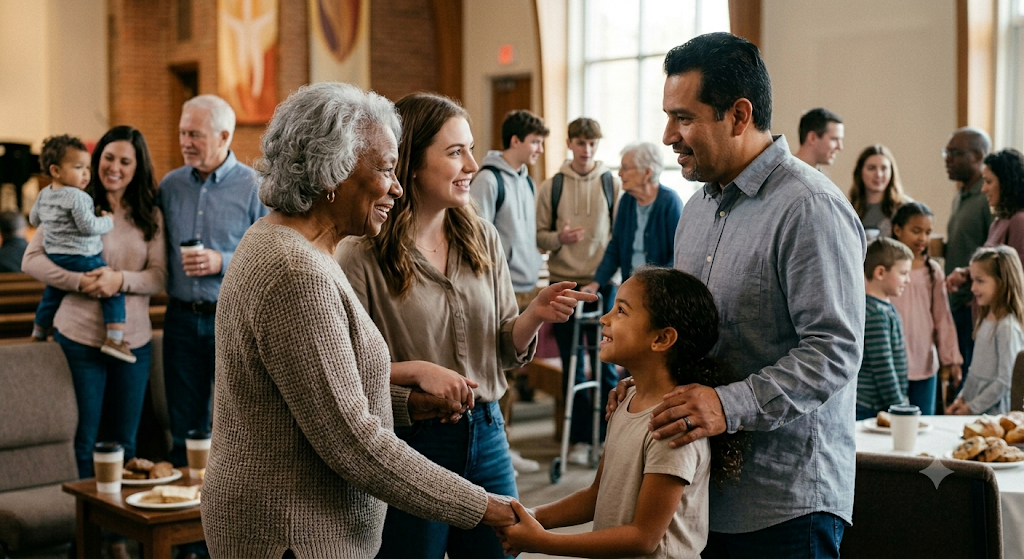
Because when the generations are connected, everything is stronger.
The Prophetic Witness
In a world that is lonelier and more divided than ever, a church that actually bridges the generation gap is a modern-day miracle. It’s a "prophetic witness" to a culture that tries to divide and keep us apart.
Imagine a church where the youngest are needed, the oldest are honored, and everyone in between is supported.
Please don’t think of this as a new program—it’s just the church being the church. When the generations connect, the whole body gets stronger. Let’s start breaking some silos.
_________________
Want to learn more or talk more about this subject? Check out “Overcoming Generational Silos in the Church” on our Church Resource Page. At CrossGen Life we think about this topic alot!
If you are not a decision maker in your congregation you might want to show this post to someone who is. Our church leadership conversations and solutions worked out together are never cookie-cutter.
Contact us at crossgenlife@gmail.com We exist to serve churches, communities, and families.